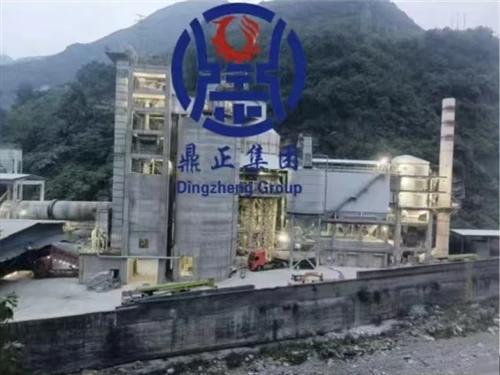
Lime rotary kiln is a commonly used industrial equipment, widely used in industries such as mining, metallurgy, and chemical industry, for the sintering and calcination process of materials such as lime, cement, and ceramics.
Working principle:
The working principle of a rotary kiln is based on the thermochemical reaction of materials at high temperatures, where the materials are heated and heat treated through a rotating cylinder. Its working principle can be divided into the following steps:
1. Material feeding: The material enters the lime rotary kiln through the feeding port and is usually evenly fed into the kiln through a screw conveyor.
2. Hot air entry: The high-temperature hot air generated by the combustion of fuel by the burner enters the lime rotary kiln through the air duct at the kiln head. The stillness of hot air helps to provide the required heat and promotes the thermochemical reaction of materials.
3. Material heating: The material gradually heats up in the lime rotary kiln as the cylinder rotates. High temperature hot air and boring contact create a layer of molten liquid on the surface of the material, promoting boring reactions and heat conduction.
4. Thermochemical reaction: Materials undergo thermochemical reactions at high temperatures, such as the calcination of cement clinker, limestone limestone, etc. These reactions will release a large amount of heat, further increasing the temperature of the material.
5. Cooling discharge: The material that undergoes thermochemical reactions gradually cools and is ultimately discharged from the discharge port of the lime rotary kiln. The cooling process can be assisted by introducing cold air or water to lower the material temperature.
Structural composition:
Kiln body, driving device, wheel and support device, cooling device, flue gas treatment device.
Ultimately, by controlling the working parameters of the lime rotary kiln, chemical reactions and treatment processes of different materials can be achieved.