The differences in the working principles between lime rotary kilns and annular shaft kilns stem from their fundamentally different structural designs, which are ultimately reflected in multiple core aspects such as heat exchange mechanisms, material movement patterns, and production continuity. A detailed comparison is as follows:
(I) Structure & Layout: Horizontal Rotary vs. Vertical Twin Shaft
A rotary kiln adopts a horizontal inclined long cylindrical structure, where material movement relies on the rotation of the kiln body. It covers a large area, has a bulky equipment size, and requires a relatively large plant space.
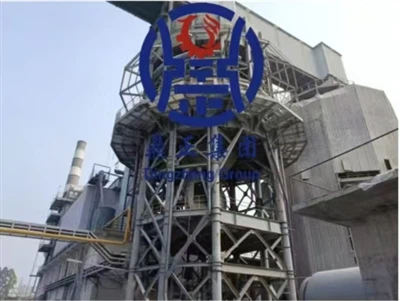
An annular shaft kiln features a vertical twin-shaft structure, with materials falling vertically by gravity. The equipment is compact and occupies a small footprint, making it more suitable for projects with limited site space.
(II) Heat Exchange Mechanism: Single Countercurrent Heat Exchange vs. Alternating Regenerative Heat Exchange
The rotary kiln uses unidirectional countercurrent heat exchange: high-temperature flue gas flows from the kiln head to the kiln tail, while materials move in the opposite direction. Only one round of direct heat exchange occurs inside the kiln, resulting in moderate thermal efficiency, with part of the heat lost through flue gas emissions.
The annular shaft kiln operates with two shafts alternating, achieving dual regenerative heat exchange: preheating materials with waste flue gas and heating combustion air with the sensible heat of quicklime. It boasts high thermal efficiency, and the heat consumption per unit product is lower than that of rotary kilns.
(III) Material Movement & Calcination: Rotating & Tumbling vs. Vertical Falling
Inside a rotary kiln, materials tumble continuously with the rotation of the kiln body, ensuring uniform heating, stable and continuous calcination, and wide adaptability to raw material particle sizes.
In an annular shaft kiln, materials fall vertically, and uniform calcination is achieved through air distribution. It has strict requirements for raw material particle size; large fluctuations in particle size may lead to poor air permeability inside the kiln and compromised calcination results.
(IV) Production Continuity & Control Difficulty: Continuous & Stable vs. Cyclic Alternation
The rotary kiln enables fully continuous production, with uninterrupted material feeding, calcination, and discharging. It has a mature operation process, a relatively simple control system, and rich operator experience.
The annular shaft kiln features cyclic continuous production, requiring a reversing device to switch functions between the two shafts. It demands a high-level automatic control system and greater operational difficulty. Professional operators are needed to control the reversing timing and process parameters to avoid quality issues caused by improper switching.
(V) Fuel Adaptability: Broad Compatibility vs. Versatile Optimization
Rotary kilns are compatible with a variety of fuels, including pulverized coal, natural gas, and low-calorific-value gas, offering high flexibility in fuel selection.
Annular shaft kilns can also use multiple types of fuels (gaseous, liquid, and solid fuels), with superior adaptability to low-calorific-value fuels (such as pure blast furnace gas). They feature high combustion efficiency, lower pollutant emissions (e.g., NOₓ), and better environmental performance.
III. Summary: Principle Differences Determine Application Scenarios
The divergent working principles of lime rotary kilns and annular shaft kilns essentially represent a technical choice between large-scale continuous production and high-efficiency energy-saving production.
With its rotating and tumbling calcination mode and wide raw material adaptability, the rotary kiln is more suitable for scenarios with complex raw material conditions and demand for large-scale continuous production (daily output per kiln exceeding 1,000 tons), such as large iron and steel complexes and large-scale chemical projects.
Relying on its high-efficiency alternating regenerative heat exchange mechanism, the annular shaft kiln is more suitable for medium-to-large-scale production scenarios with good raw material quality and high requirements for energy consumption and environmental protection (daily output per kiln: 300–800 tons), making it the preferred kiln type under the current trend of energy conservation and emission reduction.
When selecting a kiln type, enterprises should fully consider the technical differences brought about by the working principles of the two kiln types based on their own raw material characteristics, production scale, environmental requirements, and investment budget, so as to balance production benefits and environmental benefits.