MER GROUP: Brief Introduction to the Principle of Pelletization
In modern integrated steel plants, pellet ore serves as the core high-quality burden for blast furnace ironmaking. The pelletization process processes fine iron concentrate powder into high-strength, high-grade spherical pellets, solving the problem that fine powder cannot be directly charged into the furnace. Its working principle is mainly divided into four core stages: balling, drying and preheating, high-temperature roasting, and cooling into finished products, forming a complete physical and chemical transformation process.
I. Balling Stage: Formation of Green Balls
The balling stage marks the beginning of the pelletization process. The core involves mixing fine iron concentrate powder (with particle size < 0.074mm accounting for >80%), binders (such as bentonite) and water in a disc or drum pelletizer, where spherical green balls are formed through mechanical rolling and capillary forces. Physically, under the action of rotational and centrifugal forces, the concentrate particles adhere and grow layer by layer with the fine core as the center, forming green balls with a diameter of 8–16mm. Chemically, binders and water form liquid bridges between particles, enhancing the initial strength of green balls to meet the requirements of subsequent transportation and heat treatment.
II. Drying and Preheating Stage: Dehydration and Consolidation
Green balls enter the grate, where free water is removed in the drying section at 200–400℃ to prevent bursting at high temperatures, and then preliminary consolidation is completed in the preheating section at 900–1000℃. During this stage, magnetite (Fe₃O₄) in green balls is oxidized to hematite (Fe₂O₃), and the binder undergoes sintering reactions to form initial crystal connections, significantly improving the strength of green balls and laying a foundation for subsequent roasting.
III. High-Temperature Roasting Stage: Crystal Reconstruction and Strength Enhancement
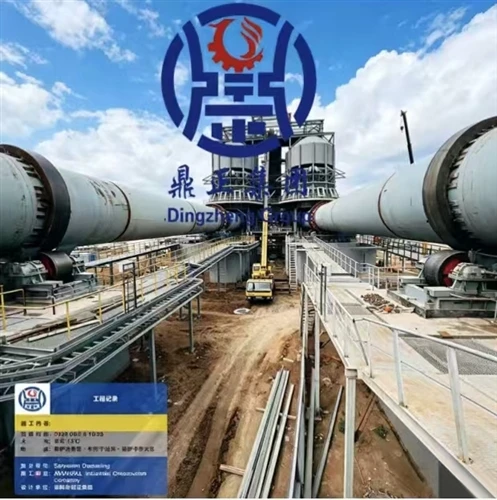
The preheated green balls enter the rotary kiln or grate kiln for roasting at 1200–1300℃, which is the key to forming the properties of pellet ore. Hematite particles recrystallize and grow, forming a dense crystal structure; impurities such as SiO₂ and CaO in the concentrate form a small amount of liquid phase, which fills the particle gaps and forms a hard consolidated skeleton after cooling, ensuring the cold strength and thermal stability of the pellet ore. Meanwhile, it ensures the complete oxidation of iron oxides, improving the grade and reducibility of the pellet ore.
IV. Cooling Stage: Performance Stabilization
The high-temperature roasted pellet ore (about 1000–1100℃) enters the annular cooler, where cold air is blown to cool it to 100–150℃. Quick cooling inhibits crystal coarsening, maintaining the dense structure and strength of the pellet ore and avoiding damage to subsequent equipment. The high-temperature waste gas at 300–400℃ generated during cooling can be recycled to the grate for drying and preheating green balls, realizing energy circulation and reducing energy consumption.
By precisely controlling the temperature, atmosphere and time of each stage, the pelletization process converts low-grade fine iron concentrate powder into high-quality pellet ore. With uniform particle size and good reducibility, it can improve blast furnace smelting efficiency and molten iron quality, making it a key link in modern iron and steel industry.